
Audio Visual technology is a business-critical component of a successful, modern, hybrid workplace and its importance makes it advisable to engage a specialist AV Integrator.
There are some key steps in a successful AV installation. Step 1 is AV consultancy, but in this article, we cover step 2, AV Design.
What is AV Design?
Commercial audio visual design involves taking your organisation’s AV needs assessment (See Step 1, AV Consultancy) and combining technical expertise with creativity to arrive at an AV systems design which best addresses both your user needs and budget. Ultimately this manifests as a hardware / software solution specification and schematic drawings showing the installers where the hardware is to be fixed in each of your workspaces.
The goal of AV design is to ensure the AV system meets the users’ needs for functionality, quality, and budget.
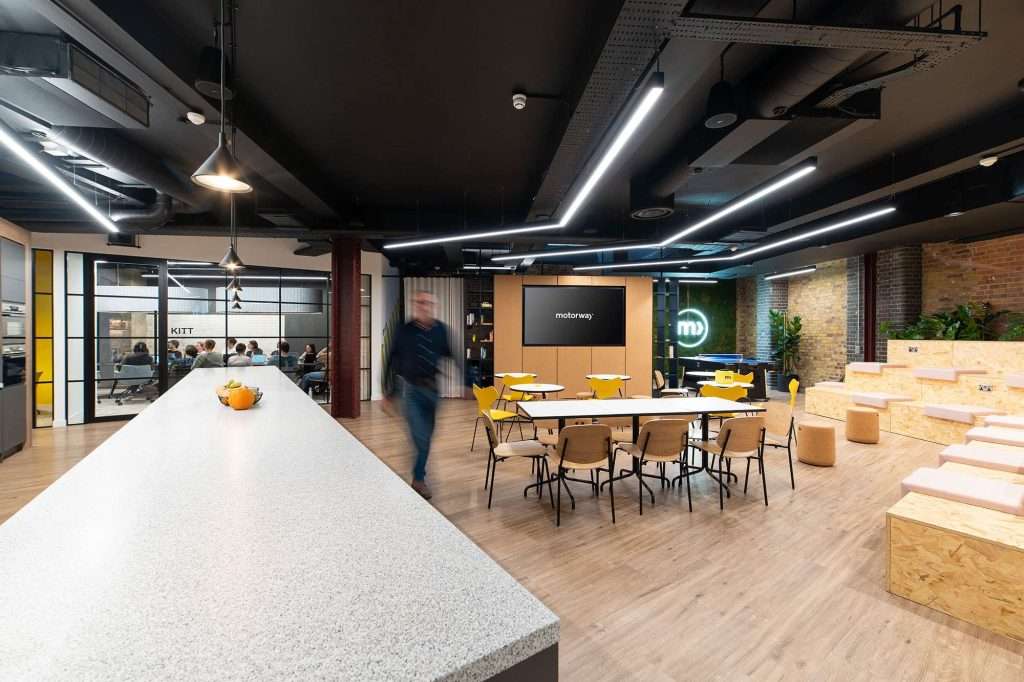
Motorway wanted a consistent experience in all their rooms and based on their requirements our AV Design provides a “native” Zoom Rooms experience using Logitech room kits from small rooms to the boardroom. View case study
What are the key steps in an AV Design?
- Review your needs assessment
In stage1 the AV Consultant will document your needs assessment and pass it to the AV Designer who will design a system to meet your needs. This will typically include floorplans, ceiling plans, photographs and a budget. The AV Designer will need to fully understand the following:- User Requirements: Be clear about the specific needs and goals of the users in each of the room / space types. Key information includes what kind of meetings will be held, how many participants and what types of devices will they use? N.B. A key component, and frequently forgotten, is the needs of remote participants be they staff, partners or customers!
- Room Analysis: The nature of your rooms / spaces has a critical bearing on the AV design and key information includes room dimensions, layout, construction, existing infrastructure, acoustics and how these spaces are used
Then the AV Designer will address the following elements of a successful AV installation:
- System Design
- Audio System: Select microphones (tabletop, ceiling, or wireless), speakers, and audio processing equipment. Ensure the system provides clear audio for all participants.
- Video System: Choose appropriate cameras (fixed, PTZ), displays (LED, LCD, projector screens), and any necessary video processing hardware.
- Control System: Design a user-friendly control interface for managing AV equipment, lighting, and other room functions. This may include touch panels, remote controls, software-based control systems, or completely autonomous experiences
- Infrastructure Planning
- Cable Management: Plan the routing of all cables for power, audio, video, and control signals. Ensure that the cabling is concealed and organized, and meets legal requirements for safety.
- Network Requirements: Ensure sufficient network bandwidth and stability for high-quality video conferencing. This may involve upgrading existing network infrastructure or implementing dedicated video conferencing networks.
- Acoustics
- Acoustic Treatment: Implement soundproofing and acoustic treatments to minimize reverberation and external noise. Consider wall panels, ceiling tiles, and carpets.
- Equipment Selection
- Hardware and Software: Select specific models and brands of Professional AV equipment that meet the requirements and budget. This includes conferencing software platforms (e.g., Zoom, Microsoft Teams), codecs, and integration devices.
- A consistent user experience is important, so equipment will be specified to ensure that user interfaces retain familiarity across all spaces, from the very small and simple, to the very large and complex. This drives user adoption and vastly improves your return on investment.
- Integration and Installation
- Installation: specify mounts to ensure equipment is secure, accessible for maintenance, and meets all safety requirements, plus provide schematic drawings to clearly show where hardware is to be positioned.
- Integration: ensure all components work seamlessly together. This includes configuring the control system and ensuring interoperability between audio, video, and network components.
For specialist legal firm Lee & Thompson MVS designed a solution for their divisible boardroom which enabled “native” Teams and Zoom Rooms experiences in the divided rooms, or either experience when the room is opened up. View case study
The benefits of using Commercial AV Design for your organisation
AV Designers specialising in commercial AV integration are specialists and experts in their field and by using a professional AV Design you will:
- Maximise user quality of experience and ease of use
- Get a solution expertly tailored to your user needs and workspace environment
- Ensure a reliable, high performance, professional AV installation
- Get a solution that uses the latest technology and can scale
- Get maximum bang for your buck and longer term ROI
- Get the reassurance that you have done it right first time
What are the drawbacks of not using AV design for your AV installation?
By not adopting an expertly produced AV design you risk:
- User complaints about requirements not addressed and difficulty in using the AV solution
- Getting a “cookie cutter” installation that doesn’t meet your specific needs
- Downtime and issues resulting from a solution comprising components that don’t interoperate well
- Installing outdated technology that becomes obsolescent quickly and can’t scale
- Not getting the right solution for your budget – either over-specified so you spend too much or under-specified so you don’t get the solution you need
- Continual issues that lead to doing the whole installation again
What does an Audio Visual Designer do?
Sometimes referred to as Audio Visual Design Consultants or Audio Visual Design Engineers. Either way, audio visual is a specialism and AV designers are engineers or technical experts who specialise in the specifics of AV technology. They translate the requirements provided by an AV Consultant into actionable designs which can then be installed by professional AV Engineers. AV Designers play a key role in ensuring you get the optimum AV installation for your organisation’s needs and budget.
In summary
AV design involves a multidisciplinary approach that combines technical knowledge, creativity, and the ability to take a needs assessment and deliver an actionable plan to address those needs. It includes aspects such as acoustics, video systems, signal processing, control systems, and multimedia content creation. AV designers work closely with architects, interior designers, engineers, and other professionals to ensure that the audio and visual elements seamlessly blend into the overall design of a space.
If your organisation is looking to undertake a professional AV installation, AV Design needs to be an element of your project.
Talk to us to learn more about AV Design and how our AV Designers can help with your project.